Wednesday, February 26, 2014
ZION ANTONI: JOURNAL OF AN EASTERN CITY(PRESS RELEASE)
Monday, November 18, 2013
ESSAY: THE TRIAL OF A CITY: CAMDEN
Saturday, June 29, 2013
THE AFRICAN AMERICAN: INSTITUTIONS. MIGRATIONS. LIBATIONS.
An installment of African peoples in America, and all social relevance. Brief in its nature, diplomatic in outreach. A simple 21st century offering of the Diaspora-
zion(ari)
New ebook/essay by Freelance Journalist/recording artist Zion Antoni.
(click Link)
Friday, September 14, 2012
Friday, October 8, 2010
"THUGZ MANSION"(TUPAC COMMENTARY)
"AINT NO REST FOR THE WEARY"
An old aphorism. Driving through camden NJ one day on an errand i seen one of the many pictures/elements of america's struggling class system.Passing through one of camden's many drug sets i caught a glimpse of a handfull of youth, barely in their teens exchanging work hand to hand in a scramble, weathering the cold air. Couple days later i listened to Thug's mansion(acoustic original) in my home, and as that recent scene and the scenes of the harsh realities many share came to mind i thought of its relation to Pac's vision. That most in these situations and environments feel trapped by circumstance.
"A place where death doesn't reside"-
Nasir bin olu dara jones
A quote from Thug's mansion(NY) featuring Nas, probally states one of the main issues in our american inner cities.Thug's mansion conceptualizes heaven as a reflection our own culture. It houses amenities from flowing liquor, to visions of our ancestors and loved ones at rest. The only difference is Pac's vision paints it with two elements we lack: a perpetual state of peace and peace of mind. In the face of any harsh reality escapism, or the need to escape is normal. At least we have a gem to resort to for everlasting peace feels like. Thug's mansion. Good looks' Pac.
THEE URBANPRIESTHOOD GROUP LLC 2010
Wednesday, September 22, 2010
GENTRIFICATION: URBAN MIGRATION(ESSAY)
" Gentrification and urban gentrification denote the socio-cultural changes in an area resulting from wealthier people buying housing property in a less prosperous community.[1] Consequent to gentrification, the average income increases and average family size decreases in the community, which may result in the informal economic eviction of the lower-income residents, because of increased rents, house prices, and property taxes. This type of population change reduces industrial land use when it is redeveloped for commerce and housing. In addition, new businesses, catering to a more affluent base of consumers, tend to move into formerly blighted areas, further increasing the appeal to more affluent migrants and decreasing the accessibility to less wealthy natives."-Wikipedia

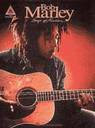
"Ill never turn my back..ill give the slums a 'try"-
The Honorable Robert Nesta Marley O.M
Its no wonder to see inner city communities, from Chi-town, to Maryland, New York to the slums of camden and philly undergo serious transformation. Execptionally minorities have witnessed the elements of their communities change. From seeing the social conditioning of corrupt public schools, drug corners, speak easy's, number houses and community centers slowly become major million dollar food, clothing, and industrial chains. The slow burning process of gentrification didn't really hit me until i seen the shutting down and evacuation of some of the most corrupted housing projects in philadelphia, and the changes on some of the old blocks i spent time on as a child in washington heights, NY. The most recent i seen was the building of new complexes, and garages in Camden NJ, on and close to some of the more poorer surrounding neighborhoods, where some of the residents are in the process of slowly populating neighborhoods like Cherry hill NJ. The process of gentrification is always the same: prepared or not, the current residents eventually have to leave. In america, the saying is still true; among the powers that be" the richer get richer, and the poorer get poorer". From a bird's eye view of the culture, from talent, and business moves i couldn't see blacks, latino's, and other nationalities limited to section 8, housing projects etc. But putting their minds together, to secure their communities, and pursue entrepenuarship.
In american inner cities the "paper chase" is still real: and relevent to political monopoly. In most cities, through gentrification some poor regions are bought by the government, proprietors, and major businesses; while some of the poor sections stay the same, for years. These sections usually benefit corrupt law enforcement and politicians that make profits off the destruction of these communities through drugs. In my years of living in and understanding philadelphia's ghetto's, and studying the urban plight, Gentrification is one issue in the lineup that's relevent to minorities. I hope this essay encourages awareness to the American class system, the good, the bad and the ugly. Peace.
Consciously Yours,
Z.A
THEE URBANPRIESTHOOD GROUP LLC 2010
Sunday, September 5, 2010
1994: ILLMATIC (COMMENTARY)
"Illmatic is the debut album of American rapper Nas, released April 19, 1994 on Columbia Records. Following his signing to Columbia with the help of MC Serch, recording sessions for the album took place during 1992 to 1993 at Chung King Studios, D&D Recording, Battery Studios, and Unique Recording Studios in New York City. Its production was handled by Nas, Large Professor, Pete Rock, Q-Tip, L.E.S., and DJ Premier. Stylistically a hardcore hip hop album, Illmatic features Nas's multi-syllabic internal rhyme patterns expressing inner city lyrical themes and narratives based on his native Queensbridge, New York. "- Consciously yours
Z.A
IN HONOR OF 9/11Thursday, July 29, 2010
URBAN DISCOURSE PART.II "AUTOBIOGRAPHY OF MALCOLM"(COMMENTARY)

"The Autobiography of Malcolm X is a 1965 book about the life of human rights activist Malcolm X (1925–1965). In 1998, Time named The Autobiography of Malcolm X one of the ten most influential nonfiction books of the 20th century."[1]-
Wikipedia
A Brief reflection of one of the most significant autobiographies written: The autobiography of Malcolm X. I first discovered this book in my mid-teens, soft cover copy, in my apartment in the Bronx. Just looking at the cover brought back the elements of everything I learned of this man up to that point, from systematic education to media (Malcolm X movie). At that young age I generally shared the same respect as many culturally, historically and politically for Malcolm, for his contributions to his race, culture, and all people, even to the point of martyrdom. The meaning and potency of the book didn’t impact me till my early twenties. These formative years included working, husselin’ nine to five’s and going to school at night. During these transitions the book resurfaced at about 23, where I was already several years engaged in personal study of African culture, and the African diaspora in America; ie: ghetto, class system, crime, prison, for my own understanding of the sociological conditions. In the progression of the years I only managed to thumb through several chapters; and simultaneously seeing via media etc. the praises of the book. Some bore as testimonials, where one man stated in an essence magazine article that the book inspired him to change his life and be a better father to his children.
At this point I realized the book had life changing effect; not only the weight of international acclaim but it spoke to all people of different colors nationalities and religions. Although Malcolm’s faith was Islam, I seen the principles and transparency of Malcolm’s life spoke universally; to the effect where people, religious, spiritual or indifferent would grab the autobiography before reading the Bible or Q’uran. A definite archive in American history..for any readers choice, as far as a learning experience, i definetly recommend it. Peace.
Consciously yours,
Z.A
THEE URBANPRIESTHOOD GROUP LLC 2010.